
WHO WE ARE
Promedklinik SG grew from something we have observed repeatedly in practice: there is an important space between what we manage ourselves and the point at which we seek medical care.
Our bodies are remarkably good at adapting.
A small change in movement becomes the way we walk. We adjust our posture without thinking about it. We compensate for discomfort, favour one side, move a little differently, or simply get used to something that was not there before.
Life carries on, and what has gradually changed can quietly become our new normal.
By the time we really notice it — or it begins to affect everyday function — the change itself may have been developing for some time.
This is where the idea behind Small Signs Matter comes from.
It is not about assuming that every small change means something is wrong. It is about becoming more aware of our own bodies, recognising change and having useful ways to observe it over time.
This has become an important part of how we think about health at Promedklinik.
Singapore is already placing considerable emphasis on preventive health, active ageing and helping people maintain function and independence throughout life.
We would like to contribute to this evolving landscape.
Our approach in Singapore draws from what we have observed and practised in our German clinic, thoughtfully adapted to a different healthcare environment and community.
We are starting simply and deliberately.
Medical Care • Preventive & Everyday Health
The wider Promedklinik concept brings together two complementary areas
For Singapore, our current focus is primarily on the Preventive & Everyday Health side.
It allows us to concentrate on an area that has become particularly meaningful through our experience in Germany: the space between self-care and medical care.
Promedklinik SG has its roots in Promedkliniken GmbH in Bavaria, Germany.
At our clinic in Volkach, Bavaria, our experience has developed around preventive and integrative healthcare, together with connections across different medical disciplines and specialists, including internal medicine, orthopaedics and neurosurgery.
Over time, this has shown us the value of what exists around conventional medical care — the everyday things people live with, adapt to and sometimes overlook.
Rather than seeing health as a series of separate services, we have become increasingly interested in the connections between movement, metabolism,
circulation, body and posture, everyday function and medical care when it is needed.
This thinking forms the foundation of Promedklinik SG.
Movement • Metabolism • Circulation
These are three interconnected areas of everyday health, with close relationships to how we move, function and experience changes in our bodies over time.
They are also areas in which gradual changes can become part of our everyday normal without us necessarily paying much attention to them.
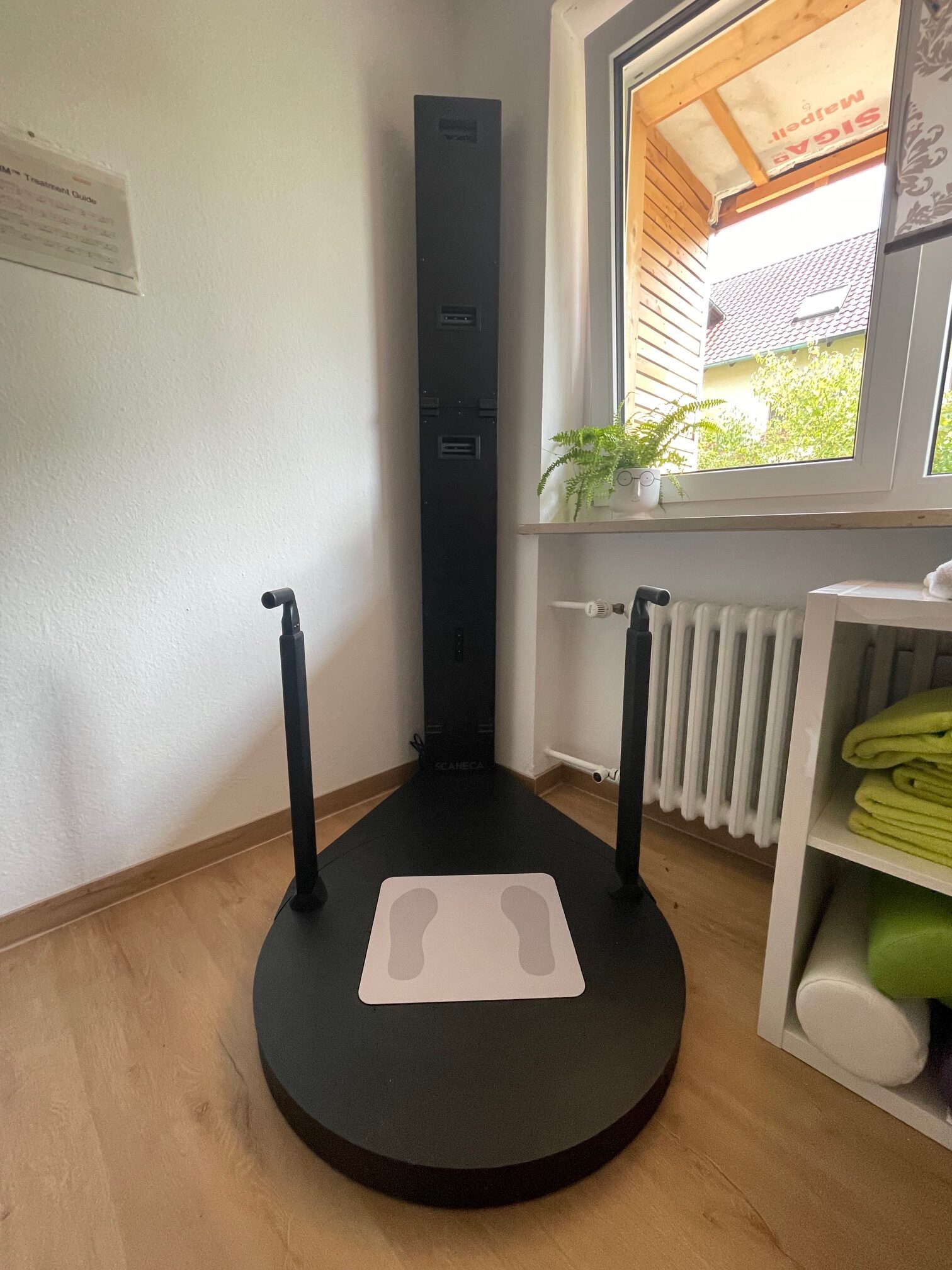
Our first services in Singapore therefore begin with Chiropody — Routine Foot Care, SCANECA — 3D Body & Posture Analysis, and non-invasive ABI & PWV Vascular & Circulation Assessment.
The individual services are important, but they are not what defines Promedklinik SG.
They are simply where we have chosen to begin. What connects them is the opportunity to care for everyday function, establish useful points of reference and observe changes over time.
As Promedklinik SG develops, we hope to build on this foundation thoughtfully — drawing from our experience in Germany while learning what is most useful and relevant here in Singapore.

Care may include:
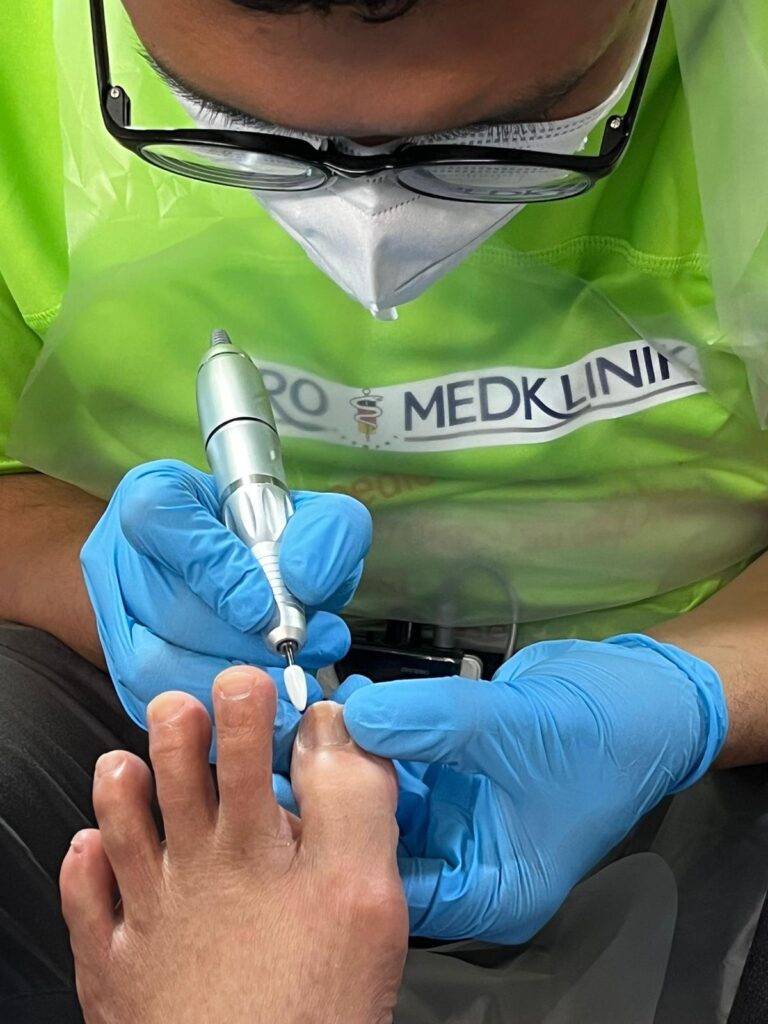
- Cutting and shaping toenails
- Filing thickened or difficult nails
- Gentle care of uncomplicated hard skin, calluses and corns
- Practical foot-care and footwear guidance
Appointments are available at A’Posh BizHub, as well as through home visits and coordinated visits to eldercare and community settings.
This service does not replace care from a doctor or podiatrist. Wounds, active infections, ingrown nails and other medical foot conditions require appropriate medical or podiatric assessment.
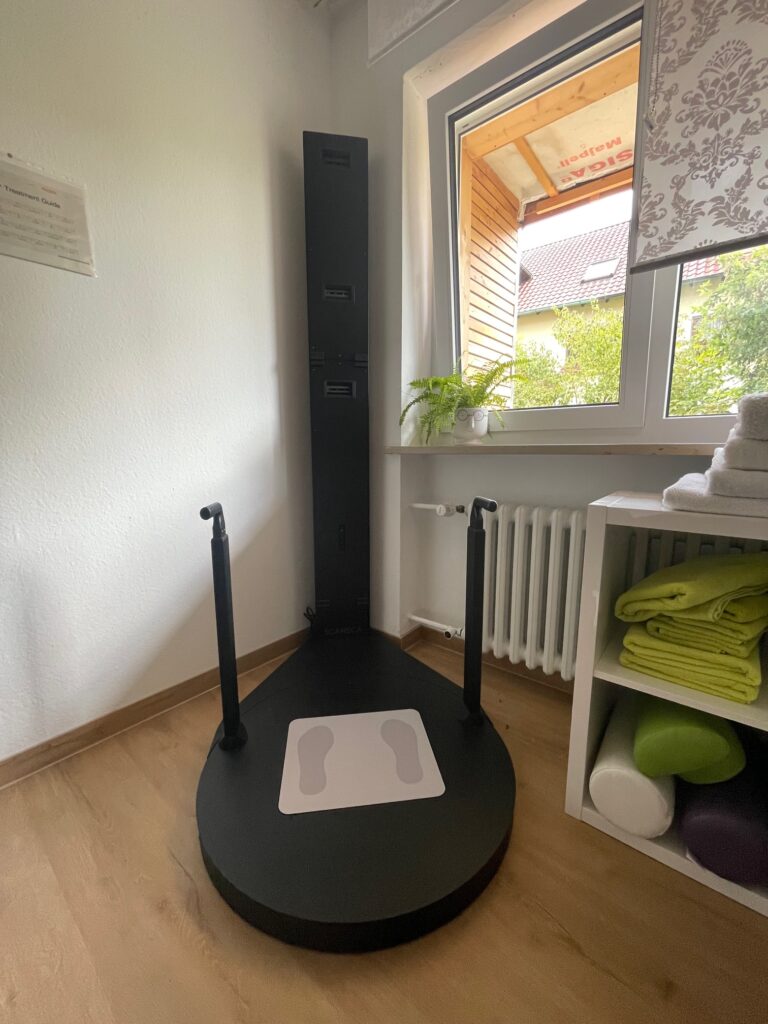
The report may include:
- A 3D body avatar
- Body circumferences and proportions
- Posture and body angles
- Left-right weight Distribution
- Estimated body-composition values
- Comparison between repeat scans
It provides a useful baseline for individuals monitoring lifestyle or fitness changes and for personal trainers reviewing progress with their clients.
Body-composition values are estimates and do not diagnose a health condition.
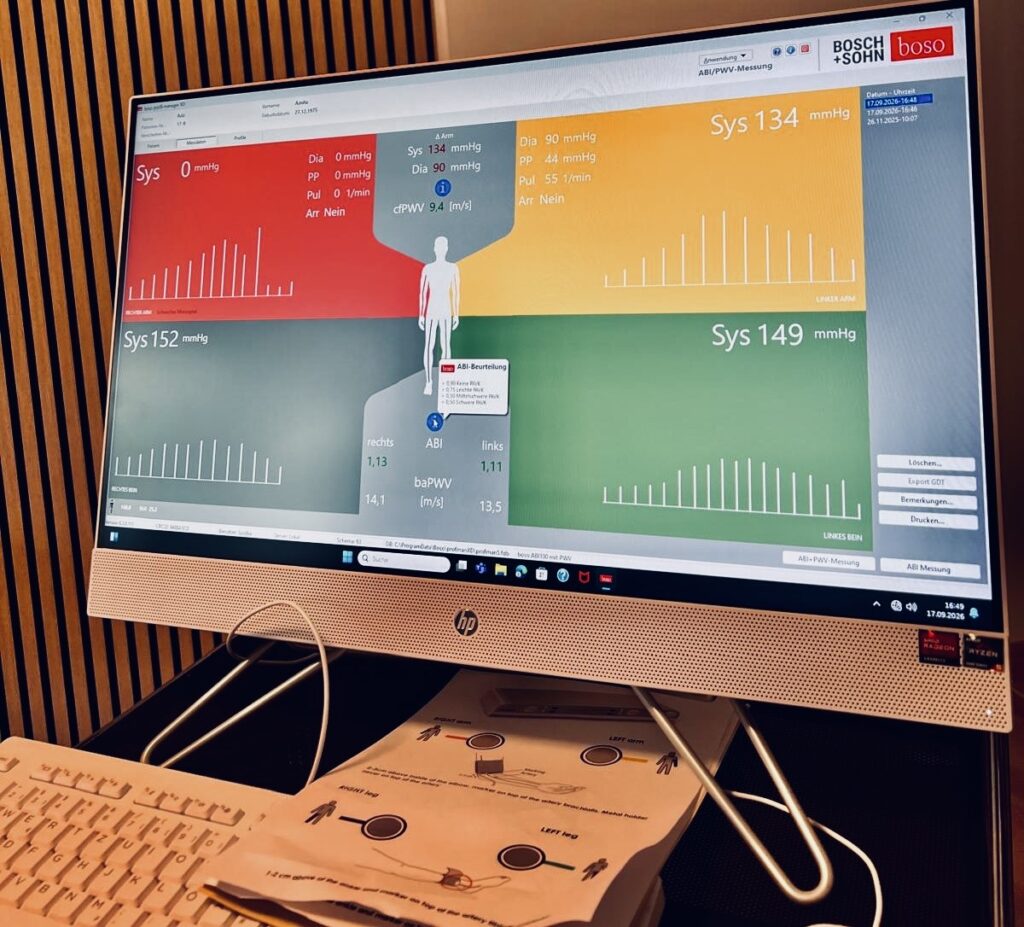
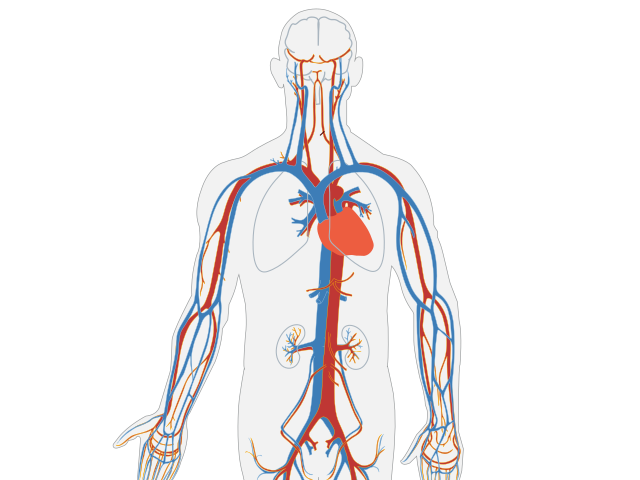
ABI compares blood-pressure readings at the ankles and arms, providing an indicator related to circulation in the legs.
PWV measures how quickly the pulse wave travels through the arteries and is used as an indicator of arterial stiffness.
The assessment is generally quick and non-invasive. Blood pressure cuffs are placed on both arms and both ankles while the system takes the measurements automatically. You receive an ABI/PWV report, and we explain the measurements and indicators shown.
The measurements are indicators, not a diagnosis. Concerning values or symptoms should be discussed with a doctor.
OUR MEDICAL LINK
SPECIALIST INTERPRETATION WITH DR ADRIAN MONDRY
We take the measurements. The doctor provides the medical interpretation.
Promedklinik SG performs the ABI/PWV measurement and provides the report. If medical interpretation is requested or considered appropriate, an appointment may be arranged with our affiliated specialist, Dr Adrian Mondry.
Dr Adrian Mondry is an Internal Medicine and Hypertension Specialist. His qualifications include Physician (FRG), MD (HHU Düsseldorf), Specialist for Internal Medicine (ÄKNo), Hypertensiologist (DHL) and MRCP (London). He previously served as a Senior Consultant in the Department of Medicine at National University Hospital and Ng Teng Fong General Hospital, where he is currently listed as a Visiting Consultant. He is accredited by the German Hypertension League.
With your consent, Dr Mondry can review the ABI/PWV report alongside your symptoms and medical history, provide the medical interpretation and advise on
appropriate next steps.
Small Signs Matter.
A small change does not necessarily mean something is wrong.
But when we know what is normal for us, change becomes easier to recognise.
And sometimes, simply noticing is where better attention to our health begins.